



Extraordinary Discovery: Iron Age War Trumpet Links to Boudicca
Recently, archaeologists made a remarkable find in Norfolk: an Iron Age war trumpet, or carnyx, that could potentially connect us to the legendary Celtic leader Boudicca and the fierce Iceni tribe. This discovery not only sheds light on the military practices of ancient Britain but also evokes a sense of wonder about our historical narratives.
A Remarkable Artefact
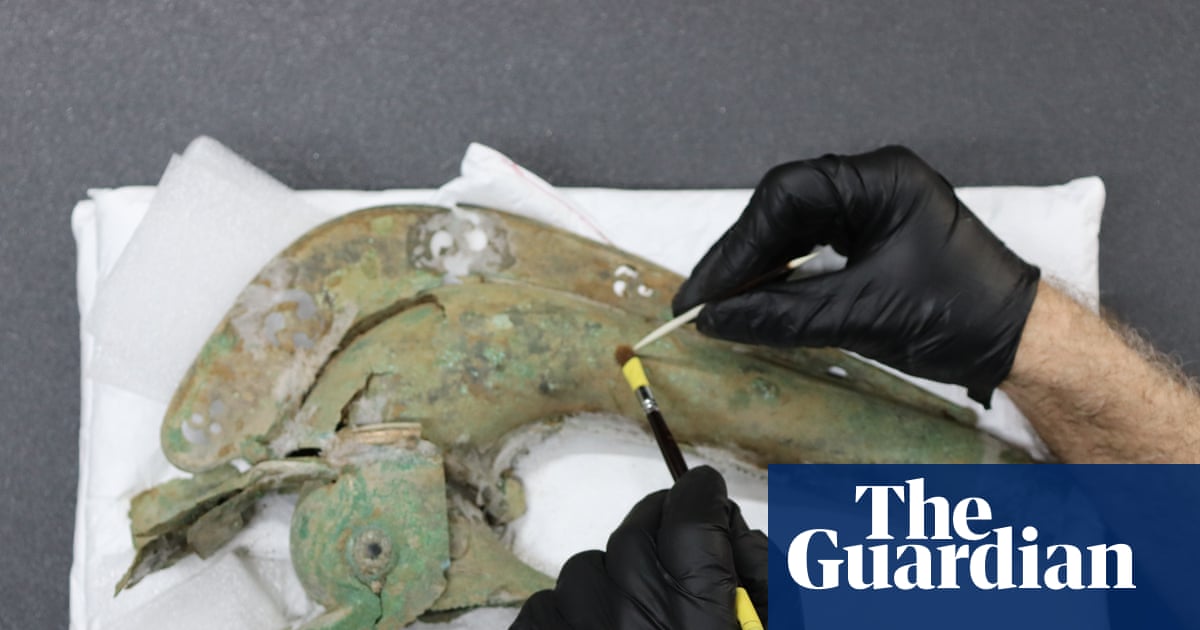
The bronze carnyx, only the third of its kind unearthed in Britain, is the most complete example ever found globally. Its design, shaped like a snarling wild animal, suggests it was used as a powerful tool of intimidation during battles, likely mounted high above the warriors to instill fear in their adversaries.
- Location: Discovered in west Norfolk during excavations for a housing development.
- Associated Finds: Alongside the carnyx, archaeologists uncovered a unique bronze boar’s head battle standard and five shield bosses, indicating a significant military cache.
- Historical Context: The artefacts were likely buried in the first century AD, a turbulent time marked by the Iceni’s rebellion against Roman forces.
Connection to the Iceni Tribe
The significance of this discovery cannot be overstated. Mark Hinman, chief executive of Pre-Construct Archaeology, described it as a “once-in-a-lifetime” find. The notion that these items could have belonged to or been used by the Iceni tribe is tantalizing. This tribe, famously led by Boudicca, fought valiantly against Roman oppression, and such artefacts could bridge the gap between historical accounts and archaeological evidence.
Hinman’s insights emphasize the lack of clarity surrounding who buried these items, yet he notes their quality suggests they were valued by important figures of the time:
- The items’ craftsmanship indicates they were likely significant to the Iceni or other groups.
- There is a rich tapestry of stories and meanings associated with such objects that we are only beginning to uncover.
Historical Significance
Historical accounts from Greek and Roman writers describe the use of carnyces by warrior tribes across Europe. The harsh sounds produced by these instruments were intended to terrify enemies, a testament to their psychological impact on the battlefield.
Fraser Hunter, an expert on Iron Age artefacts, remarked on the extraordinary nature of this find, suggesting it will reshape our understanding of sound and music in that era. The carnyx’s design, complete with intact “flappy ears,” adds a layer of personality to this ancient instrument:
- The carnyx shows signs of being repaired, indicating it was used over a prolonged period.
- Its preservation allows us a rare glimpse into the past, highlighting the importance of sound in Iron Age culture.
The Future of the Discovery
Currently, the artefacts are in the hands of conservation experts. Their future will be determined by a coroner under the Treasure Act 1996. This find will also be featured in an upcoming episode of “Digging for Britain,” airing on BBC Two, allowing a broader audience to appreciate the significance of this discovery.
As we reflect on this extraordinary find, it reminds us of the untold stories of our past. Each object unearthed has the potential to change our understanding of history, offering a deeper connection to those who walked the Earth long before us.
For more details on this remarkable discovery, I encourage you to read the original news here.