



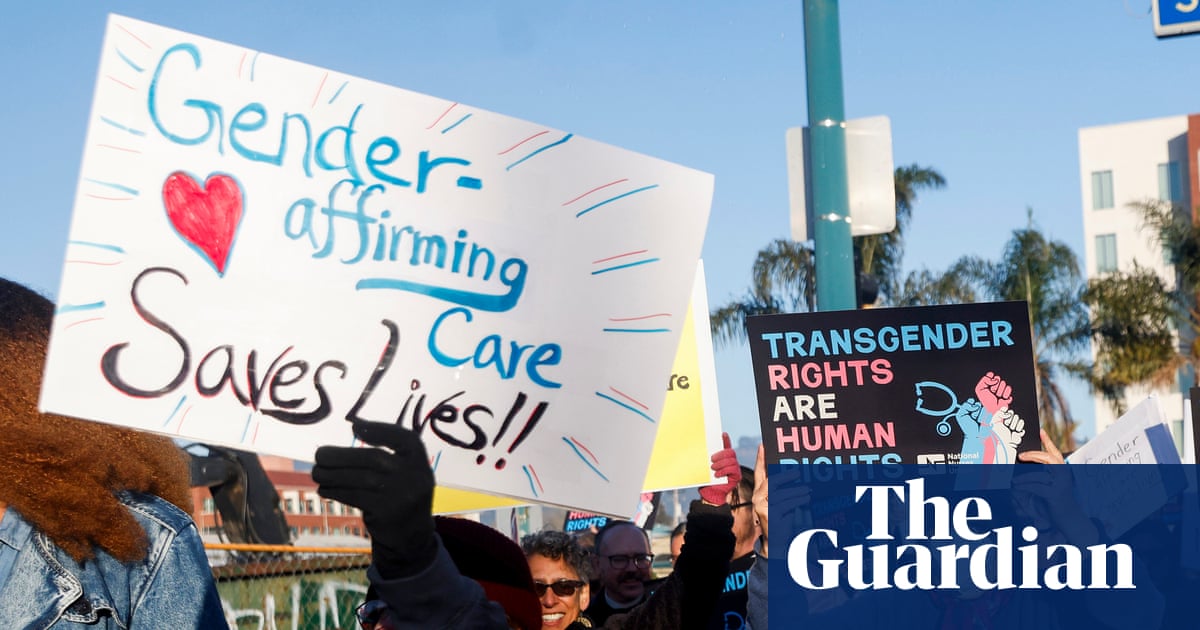
Legal Challenge Against Gender-Affirming Care Policy
The ongoing legal battle surrounding the Trump administration’s new policy regarding gender-affirming care for federal employees is not just a matter of healthcare; it speaks volumes about our evolving societal values and the rights of marginalized groups. A recent complaint filed by a group of government employees, aided by the Human Rights Campaign, has thrust this issue back into the spotlight.
Understanding the Complaint
As of Thursday, a new policy will come into effect that eliminates coverage for gender-affirming care in federal health insurance programs. This decision, announced by the Office of Personnel Management (OPM) in August, has faced significant backlash.
- The complaint has been filed with the Equal Employment Opportunity Commission.
- It argues that denying coverage for gender-affirming care constitutes sex-based discrimination.
- Testimonies from affected federal workers highlight the real-life implications of this policy.
Impact on Individuals
The Human Rights Campaign’s president, Kelley Robinson, articulated a critical point: “This policy is not about cost or care – it is about driving transgender people and people with transgender spouses, children, and dependents out of the federal workforce.” This statement encapsulates the broader implications of the policy, which extends beyond mere health insurance coverage.
Take for instance a postal service employee whose daughter has been advised to take puberty blockers and possibly hormone replacement therapy due to diagnosed gender dysphoria. Under the new policy, such necessary medical interventions would no longer be covered, leaving families in distressing predicaments.
Broader Context of the Policy
This policy is not an isolated incident. It is part of a series of measures by the Trump administration aimed at limiting access to gender-affirming care, particularly for minors. Recent proposals from the Department of Health and Human Services have sought to block such care entirely for children and restrict funding for hospitals providing these essential services.
- Senior officials, including Health and Human Services Secretary Robert F. Kennedy Jr., have labeled gender-affirming care for minors as “malpractice.”
- These views starkly contrast with recommendations from prominent medical organizations such as the American Medical Association and the American Academy of Pediatrics.
Conclusion
As this legal challenge unfolds, it serves as a crucial reminder of the ongoing struggles faced by transgender individuals and their families. The outcome of this case could have significant implications for the rights of federal employees and the broader conversation about healthcare access and discrimination in our society.
For those seeking to delve deeper into this pressing issue, I encourage you to read the original news article for more detailed information: Read more here.