



Exploring the Charmed Soundscape of North York Moors
Richard Baines opens our day with an unexpected remark: “You don’t need binoculars.” As someone who typically associates birdwatching with visual cues, I find this statement quite surprising. Even before the sun rises, we traverse icy, muddy paths, and to my astonishment, it appears that ornithological spring has already begun. Richard notes, “Birds are starting to sing,” and hints that some, like the crossbill, might have already laid eggs. This revelation sets the tone for a day filled with unexpected discoveries.
Finding the Sound in Silence
As we ascend to an open ridge, the anticipated sounds of birds are notably absent. Richard decides to take us into a sheltered wooded valley. Having spent over 40 years exploring the North York Moors, his extensive experiences are documented in his memoir, The Rarity Garden. At the tender age of 14, he began learning bird songs, frustrated by the lack of visual sightings during his woodland walks. “When I started to prioritize sound above sight, the trees came alive,” he reflects—a sentiment I aim to embrace today.
A Memorable Encounter
Descending into a wooded glade, a large bird suddenly flits from the trees. Richard excitedly declares, “Great start! Male goshawk.” This moment marks the beginning of a series of enlightening encounters.
We halt in front of a cluster of alder and hazel, where a bird is singing. Armed with the Merlin app, I attempt to identify the sounds. Richard, with a twinkle in his eye, encourages me to engage. The app quickly suggests three bird names: song thrush, chaffinch, and blackbird. Yet, the sounds all emanate from the same source, and then I hear it—a distinctive mewling cry. I look up to see it’s a buzzard. Richard chuckles, “Any thoughts?”
“That thrush just did something incredible,” I respond, still processing the moment.
Technology Meets Nature
Richard shares how the introduction of the Merlin app by Cornell University in 2014 has transformed the way bird enthusiasts engage with sounds. With over 10 million users worldwide, it serves as a powerful tool for learning about birdsong while uncovering new insights.
One memorable instance occurred during a May 2025 walk, where a participant claimed Merlin had detected a nightingale’s song. Richard swiftly redirected the group, emphasizing the rarity of a nightingale sighting in these parts. However, they ultimately found a song thrush instead, leading Richard to ponder the song’s origins during migration.
Unpredictable Sounds and Surprising Discoveries
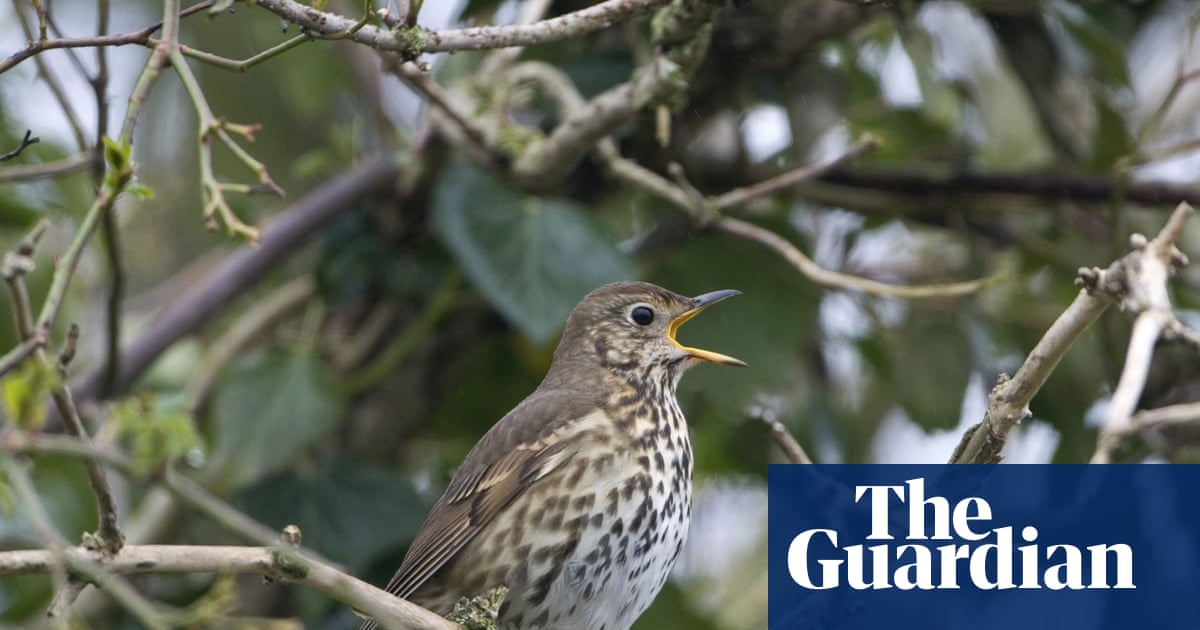
As we advance further, I spot a great tit singing in a way I’ve never heard before. Richard remarks, “It’s mimicking a marsh tit.” As I struggle to get Merlin running again, a song thrush starts to sing, and with the sun now risen, we catch a clear view of it. Richard whispers, “It’s doing a nuthatch.” The app identifies it as a coot, but we both know there’s no coot within ten miles. It’s a moment that leaves even Richard astonished.
Connecting with Nature
Standing in an icy puddle, I realize I’m not thinking about capturing this moment with my camera, but rather experiencing the thrill of sound. Richard emphasizes that this connection is what makes these walks special. “Being thrilled by bird sound frees people up, especially if you’ve gotten used to the idea that success is a good photograph.”
Richard has even led walks for individuals with sight loss, noting their heightened sensitivity to sound, which adds another layer to the experience.
A Rare Gathering
Continuing our expedition, Richard guides me toward the distant honks of pink-footed geese arriving from Iceland. Unable to see them, we rush to the nearby flooded fields of Ryedale. This year, extreme cold in Eastern Europe has driven thousands of geese to the UK, and we witness hundreds landing, along with the unique sight of Russian white-fronted geese. Richard describes this as “a once in a 25-year event.”
Having flown approximately 3,000 miles from Siberia to the Dutch coast, the geese’s journey seems miraculous. The following day, Richard calls with further news: among those geese was a single tundra bean goose, another rare sighting.
Conclusion
Despite my newfound appreciation for sound, I still cherish the visual aspects of birdwatching. Yorkshire Coast Nature offers various nature walks, including Bird Sound Safaris, starting from £40. This experience serves as a reminder of the beauty that lies in both sound and sight, enriching our connection with nature.
For more details, you can read the original news at the source: The Guardian.