



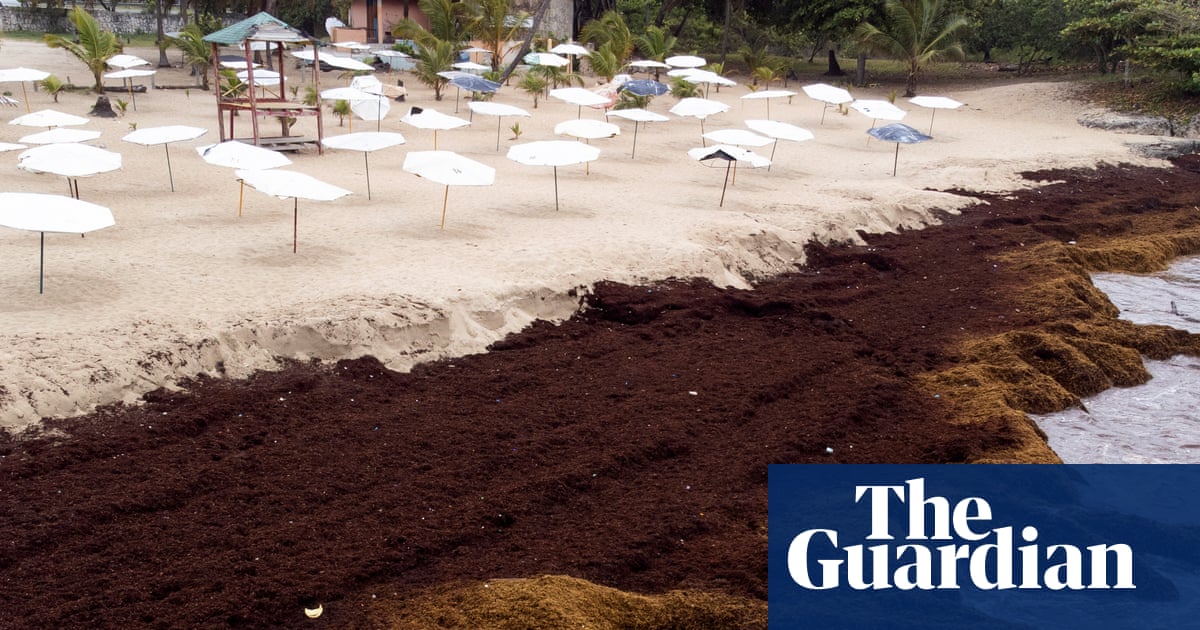
Impending Oceanic Changes: A Regime Shift Driven by Seaweed Blooms
Recent scientific findings have raised alarm bells regarding a dramatic shift in our oceans, primarily influenced by global warming and the influx of agricultural runoff. The escalating growth of massive seaweed blooms, particularly in the tropical Atlantic and western Pacific, is a testament to this environmental change. Researchers from the University of South Florida have documented an astonishing annual increase of 13.4% in these blooms over the past two decades.
The Growth of Seaweed Blooms: A Closer Look
According to the researchers, the most significant changes in seaweed proliferation have been noted post-2008. This is a pivotal moment that highlights a transition in ocean ecology:
- Historical Context: Prior to 2008, significant macroalgae blooms were virtually nonexistent, with the exception of sargassum in the Sargasso Sea.
- Current Observations: The phenomenon is not limited to one area; it spans from the Gulf of Mexico to the Congo River’s mouth, and includes alarming sightings off New Zealand and Florida.
Chuanmin Hu, a prominent oceanography professor and lead author of the study, indicates we are witnessing a fundamental shift from a macroalgae-poor ocean to a macroalgae-rich ocean—a transformation that could have lasting ecological impacts.
The Research Methodology
This groundbreaking study employed advanced artificial intelligence to analyze 1.2 million satellite images taken between 2003 and 2022. A deep-learning model was utilized to identify floating algae, a process that required extensive time and resources. The findings were illuminating:
- Seaweed blooms increased by 13.4% annually.
- Microalgae, like phytoplankton, experienced a more modest growth of 1% each year.
- The most significant increases in both macroalgae and microalgae were observed in the past decade, correlating with heightened global ocean warming since 2010.
Furthermore, the researchers identified key tipping points in 2008, 2011, and 2012 that illustrate the dramatic shifts occurring at different times for various types of seaweed.
Implications of the Findings
While sargassum has adapted and thrived in specific regions, phytoplankton has not shown a similar resilience, indicating their vulnerability to temperature changes and eutrophication. The implications of these findings are profound:
- We may be experiencing a regime shift that favors macroalgae, leading to significant alterations in atmospheric radiative forcing and light availability.
- This shift could drastically impact carbon sequestration, ocean biogeochemistry, and the stability of upper ocean layers.
In conclusion, these findings, published in Nature Communications, underscore the urgent need to address the changing dynamics of our oceans and the broader implications for climate change and marine ecosystems.
For those interested in exploring the original report further, please read the full article here.