



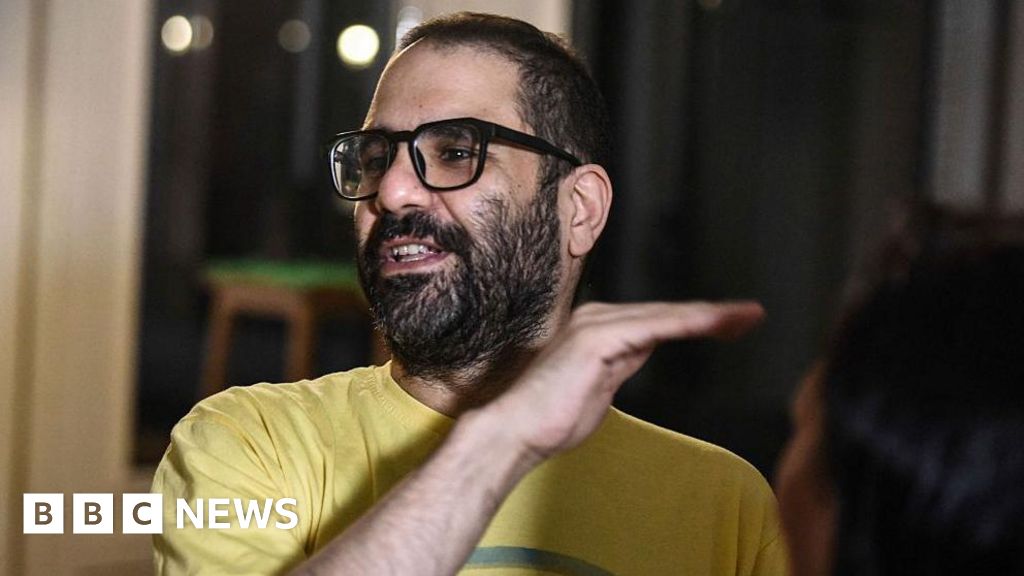
Alaa Abdel Fattah’s Controversial Return to the UK: A Deep Dive
Recently, we’ve witnessed a significant uproar surrounding Egyptian democracy activist Alaa Abdel Fattah, who has found himself at the center of a heated debate following his arrival in the UK after being released from an Egyptian prison. As he grapples with the resurfacing of his old tweets, the implications of his statements and the ensuing political discourse warrant our attention.
Background on Abdel Fattah
Fattah, a dual national, has a complex history marked by his activism against human rights abuses in Egypt. His release from prison after a conviction for “spreading fake news” sparked a mix of relief and controversy as he returned to the UK. However, his past has come back to haunt him.
Resurfacing of Old Tweets
Following his arrival, several of Fattah’s historical tweets have resurfaced, in which he made inflammatory remarks about violence against police and Zionists. This has led to calls from political leaders, particularly from the Conservative and Reform UK factions, demanding that the Home Secretary consider deportation.
Political Reactions and Implications
The reactions to Fattah’s tweets have been swift and severe:
- Home Secretary Shabana Mahmood is under pressure to evaluate Fattah’s citizenship status.
- Kemi Badenoch, the Conservative leader, described Fattah’s comments as “disgusting and abhorrent.”
- Nigel Farage has argued that individuals with extremist views should not be allowed into the UK.
- Senior Labour MPs have also joined the chorus, calling for a review of Fattah’s citizenship.
Fattah’s Response
In light of the backlash, Fattah has issued a public apology, acknowledging the hurt his comments have caused. He insists that some of the tweets were taken out of context and claims they were misinterpreted. For instance, he mentioned that a tweet alleged to show homophobia was actually meant to ridicule such attitudes.
Debate on Citizenship and Due Diligence
The discourse surrounding Fattah raises important questions about citizenship and due diligence:
- Is it appropriate to revoke citizenship based on past statements made on social media?
- What responsibilities do political leaders have to vet individuals they advocate for?
- Are the standards for citizenship being applied consistently across the political spectrum?
The Broader Context
Fattah’s case is emblematic of a larger struggle between freedom of expression and the repercussions of inflammatory rhetoric. While he has been a vocal advocate for human rights, the emergence of his controversial statements complicates his narrative. This contradiction highlights the challenges faced by activists in the digital age, where past comments can resurface and reshape public perception almost instantaneously.
Conclusion
The situation of Alaa Abdel Fattah is a nuanced one, intertwining human rights advocacy with the potential ramifications of political rhetoric. As the UK navigates these complexities, it is crucial to consider both the implications of Fattah’s past and the importance of free speech in activism.
For a more detailed account of the events surrounding Alaa Abdel Fattah, I encourage you to read the original news article here.