



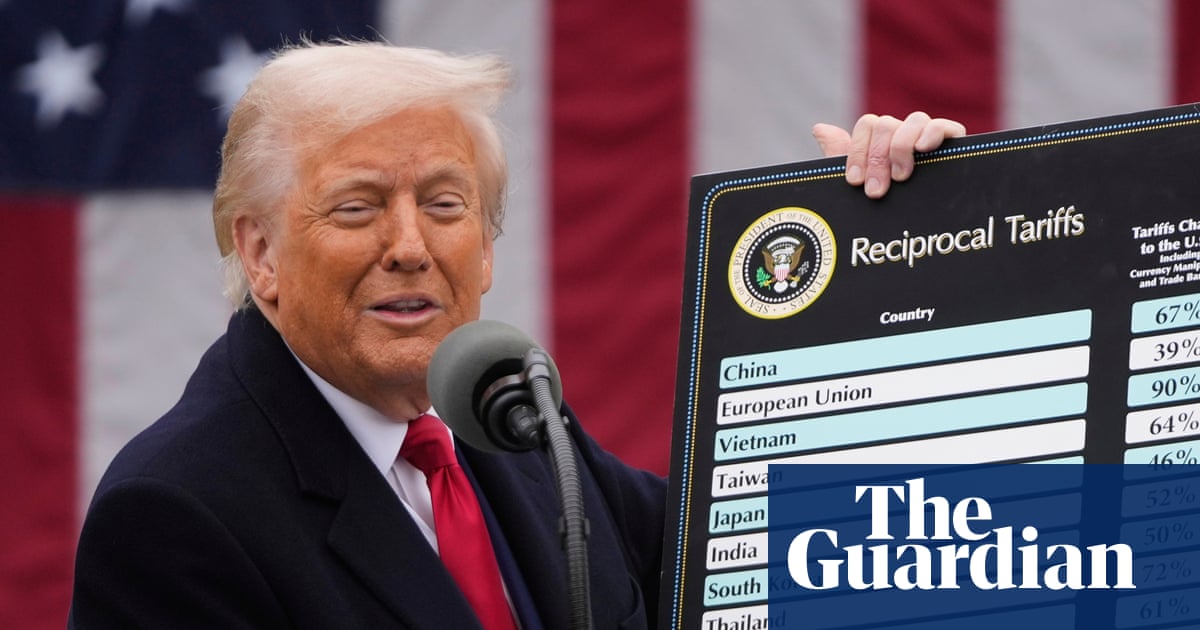
Analysis of the US Supreme Court Ruling on Trump’s Tariffs
The recent ruling by the US Supreme Court that invalidated Donald Trump’s global tariffs has sent ripples through international trade dynamics. Both Britain and the European Union are now evaluating the potential repercussions of this decision, while businesses on both sides of the Atlantic proceed with caution.
UK Government Response
A spokesperson for Downing Street articulated a measured approach, indicating that:
- The UK government is working with the US to fully understand the implications of the Supreme Court’s ruling.
- They anticipate that the UK’s privileged trading status with the US will be maintained.
This optimism stems from the fact that the UK managed to secure a uniquely favorable tariff arrangement, with just a 10% tariff on imports, compared to the EU’s broader 15% rate.
EU’s Strategic Analysis
The EU is also in a state of assessment. Their focus is on:
- Continuing to work towards reducing the tariffs imposed on European exports by the US.
- Engaging with the US administration to clarify future steps in light of the recent ruling.
Despite previous agreements made during negotiations at Trump’s golf course in Scotland, where a 15% tariff was established, there remains a significant 50% tariff on steel products that is not likely to change.
Business Community’s Perspective
Business leaders have expressed a mix of cautious optimism and lingering uncertainty:
- John Denton from the International Chambers of Commerce noted the “fresh uncertainty” for companies trading with the US, despite potential refunds for tariffs impacting corporate balance sheets.
- William Bain from the British Chambers of Commerce pointed out that while the ruling clarified the use of executive powers, it did little to alleviate the prevailing confusion for businesses.
There are concerns that the administration may resort to even broader tariffs, potentially affecting critical sectors such as technology and agriculture.
Market Reactions
Interestingly, the stock market reacted positively to the ruling:
- The UK’s FTSE 100 index reached a new intraday high, closing 0.56% higher.
- Exporters, including Diageo and Burberry, saw significant gains, suggesting a renewed confidence in international trade.
- European carmakers like Stellantis also reported positive movement in their stock prices.
This uptick in the market signals hope among investors that the ruling may lead to more stable trade relationships moving forward.
Conclusion
The ruling by the Supreme Court has undoubtedly introduced new dynamics into the trade landscape, shifting the focus back to negotiations and cooperative strategies between the US, UK, and EU. However, the complexities involved in tariff refunds and potential new tariffs on other products could continue to create uncertainty for businesses. As we navigate through these developments, it will be crucial to observe how these governments respond and adapt to the changing trade environment.
For more in-depth coverage and original reporting on this topic, please read the original news article.