



Groundbreaking Discovery at CERN: A Heavier Proton Unveiled
In an exciting development from the Cern nuclear physics laboratory near Geneva, scientists have successfully identified a heavier version of the proton, a fundamental building block of matter. This discovery could significantly enhance our understanding of the universe at its most fundamental level.
The Discovery Process
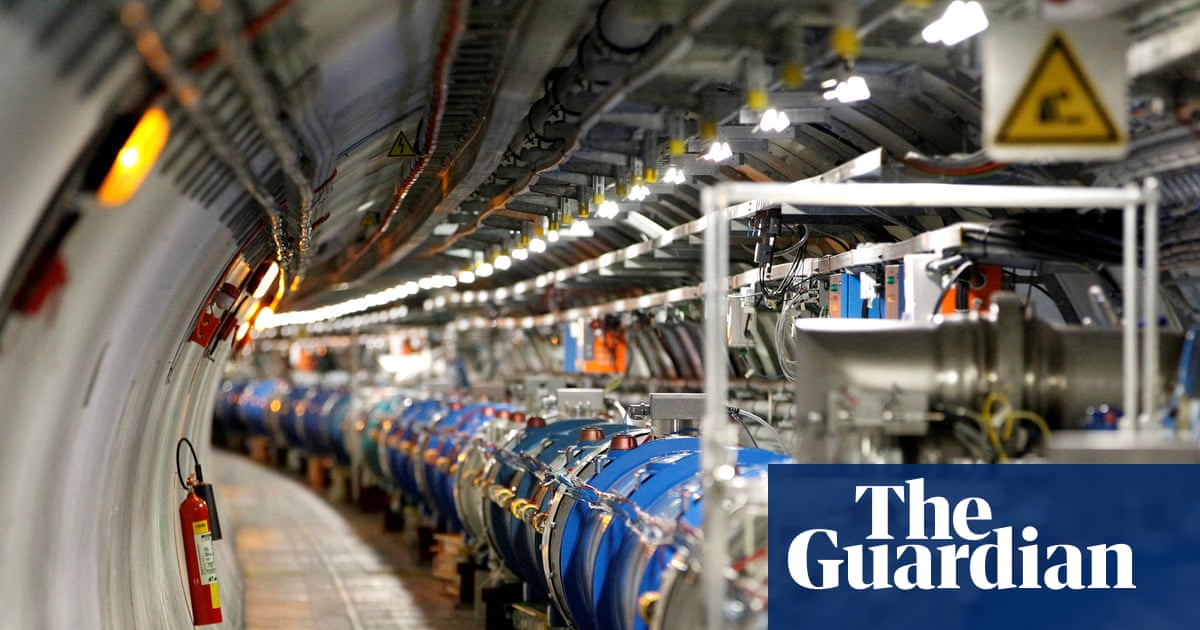
The detection of this new particle occurred within the Large Hadron Collider (LHC), where protons collide at nearly the speed of light. Such high-energy collisions replicate the conditions of the universe immediately after the big bang, allowing for the creation of various particles:
- The new particle is reported to be four times the weight of a standard proton.
- Physicists involved in the LHCb experiment attributed the discovery to enhancements made to the detector, which increased its sensitivity and capability.
- Professor Tim Gershon from the University of Warwick emphasized the significance of this advancement, noting that the new detector allowed the identification of this heavy proton in just one year, whereas the previous model failed to detect it over a decade.
Understanding the Heavy Proton
The newly identified particle, referred to as Xi-cc-plus, is not merely a heavier proton; it features a different composition:
- In this heavy proton, both up quarks are substituted with charm quarks.
- This transformation emphasizes the particle’s fleeting existence, as it decays into other particles in less than a millionth of a millionth of a second.
As stated by Professor Chris Parkes from the University of Manchester, learning more about such particles offers insights into the strong nuclear force that holds protons and neutrons together, a fundamental aspect of atomic structure.
Funding Challenges and Future Implications
However, this monumental achievement is overshadowed by looming funding cuts from UK Research and Innovation (UKRI). The organization plans to withdraw £50 million earmarked for the LHCb’s final upgrade, which raises concerns about the future of particle physics in the UK:
- The cuts have sparked outrage among UK scientists, particularly those involved in particle physics, astronomy, and nuclear physics.
- Projects, including the essential LHCb upgrade and an electron-ion collider in collaboration with US researchers, face potential setbacks.
- Chi Onwurah, chair of the Commons science committee, has described these funding decisions as “wholly unacceptable” and called for urgent action to reverse them.
Professor Gershon has stressed the importance of maintaining funding for the LHCb upgrade, asserting that no other experiments currently in operation or planned could achieve similar physics insights.
Conclusion
This discovery at CERN not only marks a significant milestone in particle physics but also highlights the pressing need for continued investment in scientific research. The implications of understanding heavier protons and the strong force are profound, potentially unlocking new chapters in our comprehension of the universe.
For those interested in delving deeper into this story, I encourage you to read the original news article here.