



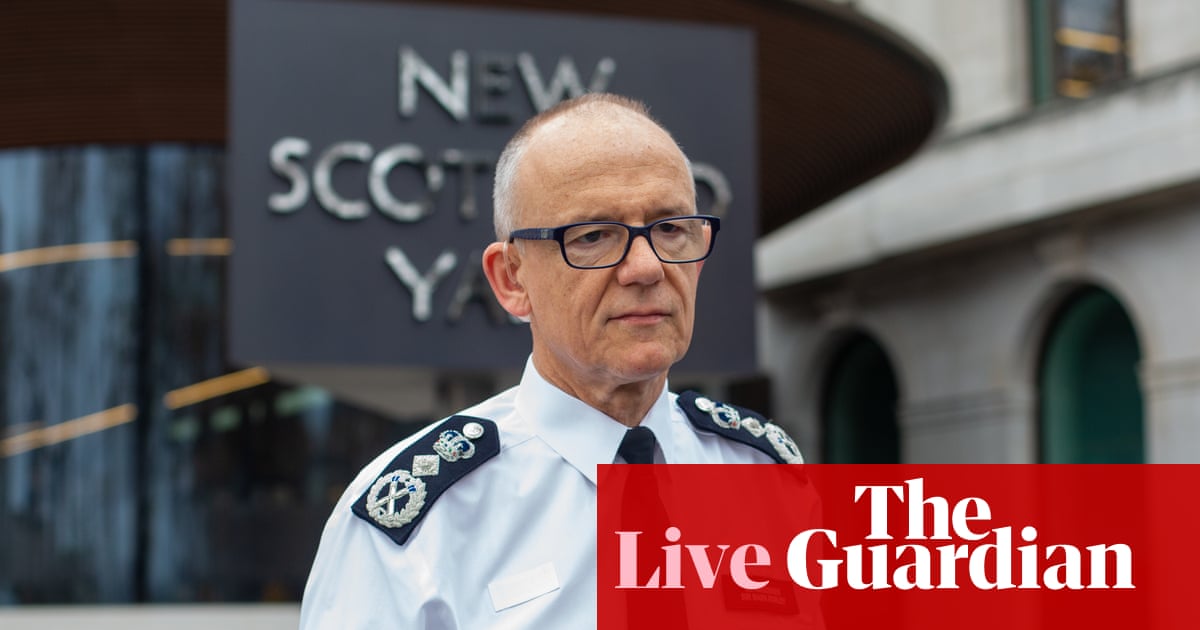
Met Police Commissioner Mark Rowley Responds to Trump’s Claims About London Crime
In a recent interview, Sir Mark Rowley, the Metropolitan Police Commissioner, strongly criticized former President Donald Trump’s remarks regarding crime in London, labeling them as “complete nonsense.” This statement comes in the backdrop of Trump’s repeated assertions about crime levels in London, which he attributes to alarming reports he has encountered through media channels.
Trump’s Alarmist Claims
Trump has voiced significant discontent with the state of crime in London, attributing blame to Mayor Sadiq Khan. His comments have included:
- Claims of “no-go areas” for police in London.
- Allegations of the imposition of sharia law in certain neighborhoods.
- Concerns over the city’s safety, which he expressed during a recent interview with Politico.
Rowley’s Counterarguments
In his LBC interview, Rowley provided a robust defense of London, countering Trump’s assertions with statistics and his own observations:
“There’s no no-go areas, that’s completely false. How anybody in America can suggest the UK is violent is completely ridiculous. The homicide rate in London is lower than every single US state. It’s lower than all their big cities.”
He further emphasized, “This is a safe city. I’m not going to pretend it’s perfect. But we who are proud Londoners need to fight back against this trend of trying to rubbish our city.”
Rowley’s Perspective on Safety
Rowley highlighted several key statistics that bolster his stance:
- The homicide rate in London is lower than in major cities like New York, Toronto, Paris, Brussels, and Berlin.
- London’s murder rate is notably lower than that of New York, which Rowley asserts is three or four times higher on a per capita basis.
Political Implications
Rowley opted not to engage directly in the political dispute between Trump and Khan, focusing instead on the factual safety of the city. This approach underscores the importance of police leadership maintaining a non-political stance in public discussions while advocating for accurate representations of crime statistics.
Conclusion
This exchange raises crucial questions about the portrayal of urban safety in media narratives. Rowley’s defense of London serves as a reminder of the complexities involved in discussing crime, particularly when political figures make sweeping statements based on anecdotal evidence.
For further insights, you can read the original article here.