



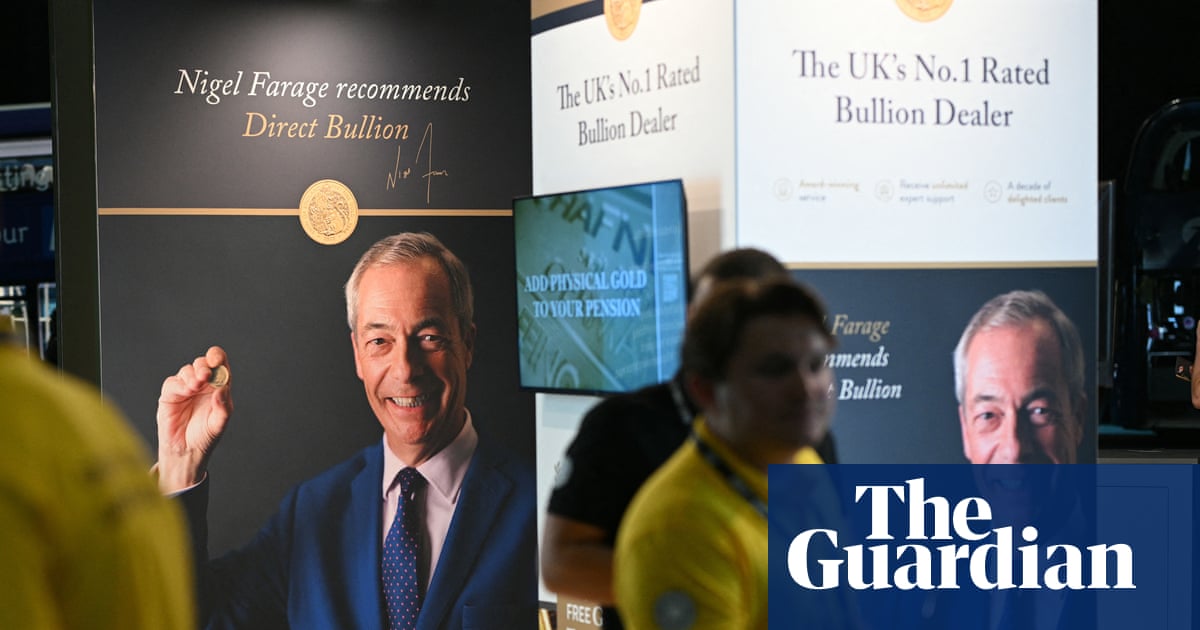
Farage’s Controversial Gold Promotion: A Risky Investment?
Recently, Nigel Farage has come under fire for his lucrative side gig, earning £400,000 annually by advocating for the purchase of physical gold as part of pension investments. This salary is more than four times that of a typical MP, raising eyebrows about the ethics and implications of such a role.
The Gold Pitch
Farage’s promotion of gold takes place through his work with Direct Bullion, where he engages in a mere four hours of work per month. His outreach efforts, primarily through social media platforms like Facebook and YouTube, urge individuals to consider gold as a stable investment to safeguard and grow their wealth tax-efficiently.
Concerns and Criticism
However, there are significant concerns regarding the messaging in Farage’s promotional content:
- Many of his videos lack clear disclaimers about the volatility of gold, which can decrease in value.
- There is little to no mention of storage costs associated with holding physical gold.
- Investing in gold does not provide regular income, such as interest or dividends, which is a crucial consideration for investors.
Expert Opinions
Industry experts weigh in on the topic, with Tom McPhail, a governor at the Pensions Policy Institute, calling the notion of converting pension funds into gold “niche” and suitable only for seasoned investors:
- McPhail emphasizes that while holding gold isn’t inherently wrong, one must account for transaction and storage costs.
- He advocates for the average person to stick with workplace pensions and diversified portfolios, rather than venture into gold investments.
The Risks of Following Farage
McPhail further argues that Farage’s strong personal brand could lead many to blindly follow his investment advice, which poses a high risk:
- Investing heavily in gold, as Farage suggests, could be considered risky for the average investor.
- Farage’s claim of significant returns from gold investments, while compelling, may not be applicable to everyone.
Regulatory Scrutiny
Tom Brake, chief executive of Unlock Democracy, has taken steps to address these concerns by contacting the Advertising Standards Authority (ASA) for a review of Farage’s promotional material. He pointed out that:
- Some videos lacked disclaimers altogether.
- In cases where disclaimers were present, they were displayed in such small fonts that they could easily go unnoticed.
The Political and Financial Landscape
Farage has defended his stance, claiming that his advocacy for gold has led to substantial returns for investors. Nonetheless, the ethical implications of a political leader endorsing specific financial products remain contentious. He is also involved in various other roles that contribute to his income, including positions with GB News and as a columnist for the Daily Telegraph.
Conclusion: A Cautious Approach to Gold Investment
While gold can play a role in a diversified portfolio, as noted by investment analysts, it’s crucial to approach this asset class with caution and a thorough understanding. As Kate Marshall from Hargreaves Lansdown suggests, utilizing exchange-traded commodities (ETCs) for gold exposure may be a more prudent route for most investors.
In conclusion, Farage’s promotion of physical gold as a pension investment raises important questions about financial advice, responsibility, and the role of public figures in influencing investment decisions. For those interested in the original reporting on this topic, I encourage you to read more at the source: The Guardian.