



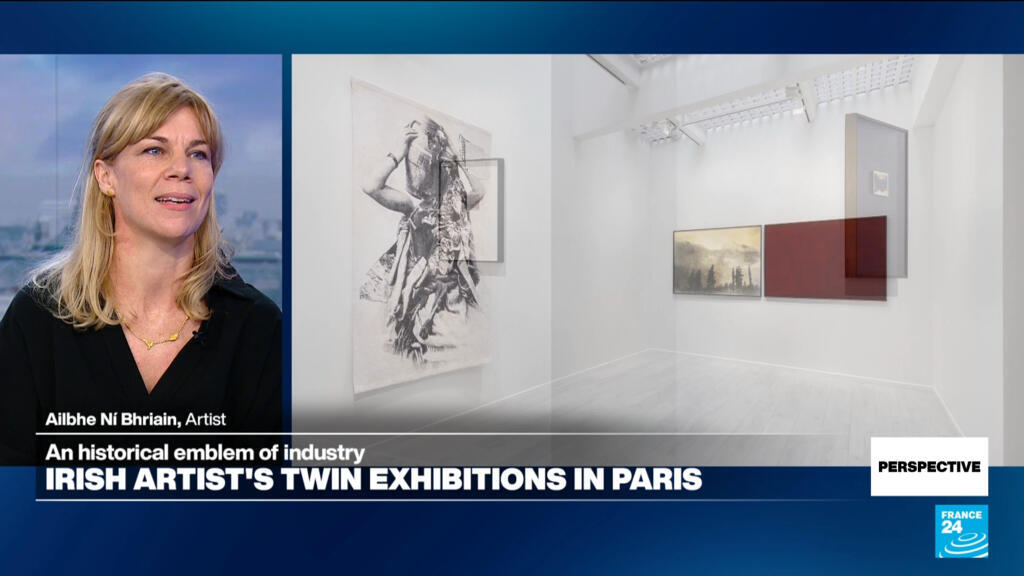
Ailbhe Ní Bhriain’s Artistic Vision in Paris
In a captivating exploration of identity and materiality, renowned Irish artist Ailbhe Ní Bhriain has brought her distinctive vision to Paris, showcasing her work across two exhibitions at the Irish Cultural Centre and the Andréhn Schiptjenko gallery. Her bold artistic expressions invite us to reflect on the themes of industry, empire, and permanence.
Artistic Approach and Materials
Ní Bhriain’s choice of materials is particularly striking. She employs an eclectic mix, including:
- Silk: Known for its luxury and softness, adding a tactile quality to her pieces.
- Wool: A nod to traditional craft, grounding her work in heritage.
- Cotton: Versatile and accessible, it speaks to everyday life.
- Lurex: The use of this synthetic fiber introduces a contemporary twist, merging the old with the new.
Through these materials, she constructs what she describes as an “emblem”—a representation of the complexities of our historical narratives and the legacies we carry forward. This blend of the traditional and the modern not only showcases her technical prowess but also her ability to weave stories that resonate with a broad audience.
Exhibitions in Paris
Her exhibitions create a dialogue between the spaces they occupy, each setting enhancing the thematic concerns of her work. The Irish Cultural Centre, with its cultural significance, allows her pieces to engage deeply with notions of Irish identity, while the Andréhn Schiptjenko gallery provides a more contemporary backdrop that highlights her innovative approach.
Thoughts on the Impact of Her Work
Ailbhe Ní Bhriain’s work serves as a powerful reminder of the role art plays in shaping our understanding of history and identity. Her dramatic, large-scale installations challenge viewers to confront the narratives embedded in the materials she uses. In a world increasingly defined by fleeting moments, her focus on permanence encourages us to reflect on what we wish to preserve and celebrate.
Conclusion
As I reflect on Ní Bhriain’s exhibitions, I am struck by the way she invites us to rethink our relationship with the past and the materials that define our present. Her art transcends mere aesthetics; it becomes a vessel for discourse, a platform for exploration of the themes that bind us.
For a more in-depth look at Ailbhe Ní Bhriain’s insights and her artistic journey, I encourage you to read the original news at France 24.