



New Discoveries from Medieval Cemetery in Wales
Intriguing findings from a recently excavated cemetery in Wales have shed light on the lives and burial practices of a unique community predominantly composed of women. This remarkable site, dating back to the 6th or 7th century, raises fascinating questions about the roles these women may have played in society.
Archaeological Findings
The excavation, which has been ongoing for the past four years at Fonmon Castle, has revealed:
- 58 skeletons, with an overwhelming majority belonging to women.
- A small building structure likely linked to religious practices.
- Ornate artefacts such as colorful glass beads, pottery, and a quern stone used for grinding flour.
These discoveries are pivotal in understanding the nature of this burial ground, which appears to have been part of an early female religious community.
Significance of the Findings
The discovery of the small building’s outline is particularly intriguing. Dr. Andy Seaman from Cardiff University, who leads the excavation team, suggests it could be a chapel or shrine. This connection to a religious site implies that these women may have had a significant role in the spiritual life of the period.
Community Insights
Artifacts unearthed alongside the skeletons indicate a community that thrived in proximity to the cemetery, living lives that were both hard yet possibly enriched by luxury:
- Domestic items such as pottery and glass suggest daily life was vibrant and communal.
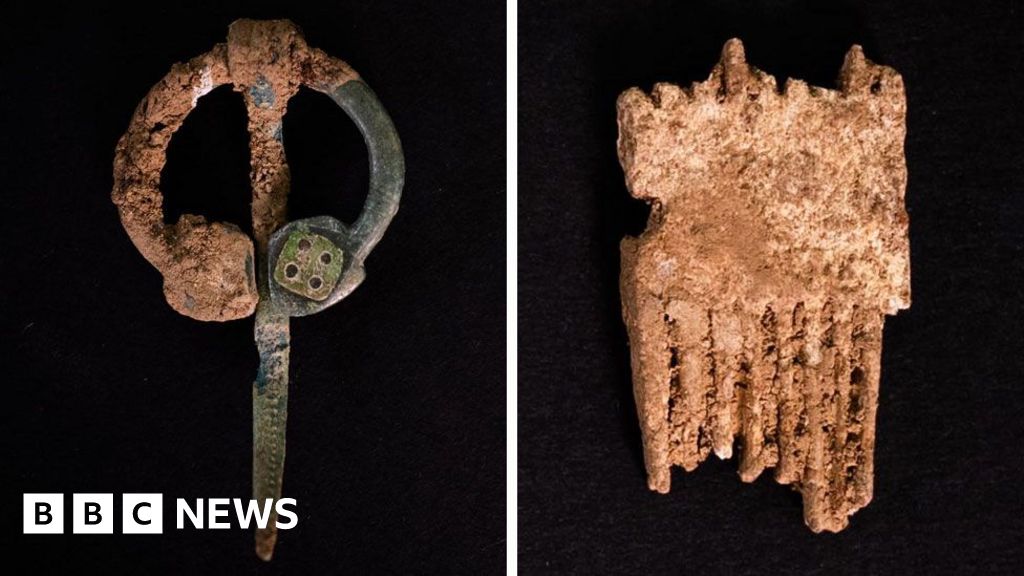
- Wealth indicators, like ornate brooches and intricate combs, reveal a culture that valued craftsmanship and beauty.
The graves themselves, sometimes containing multiple individuals, suggest a close-knit community that did not shy away from reusing burial sites.
Unanswered Questions
However, the excavation has also raised numerous questions:
- What roles did the few male and child skeletons found play in this community?
- Why were two women found buried in a ditch under suspicious circumstances, one even bound?
These elements hint at complex social dynamics, perhaps involving conflict or punishment within this community.
Future Excavations
The team plans to continue their work, with hopes of uncovering more about early Christianity and the nature of religious sites during this formative period in history.
As Dr. Seaman aptly puts it, “We don’t really understand early church sites… how they functioned, what they looked like, how they were organized.” This ongoing research promises to enrich our understanding of the past.
For those interested in diving deeper into this fascinating story, I encourage you to read the original article.