



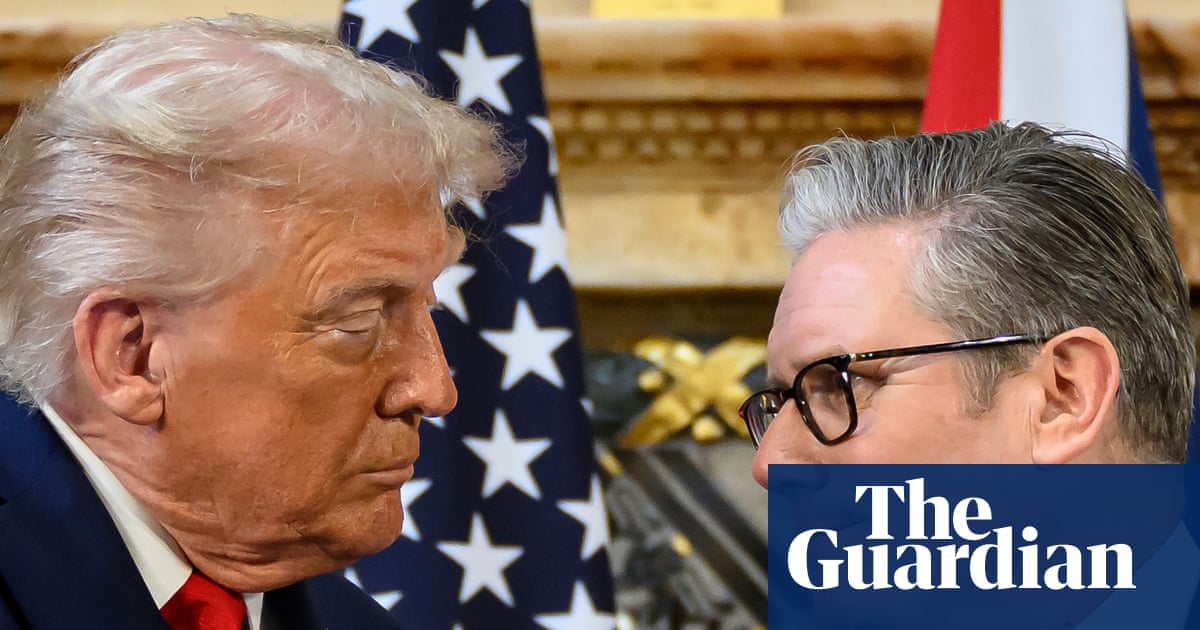
Trump’s Critique of Prime Minister Starmer: A Call for Stronger UK Support
In a striking move that echoes sentiments of a bygone era, former President Donald Trump has once again directed his sharp criticisms toward UK Prime Minister Keir Starmer. This time, the focus is on the UK’s hesitance to extend immediate support for the ongoing US-Israeli military operations aimed at Iran.
The Context of Criticism
Trump’s comments came in the wake of a significant decision by the UK government, allowing US forces access to military bases at Fairford in Gloucestershire and Diego Garcia, albeit for “specific and limited defensive purposes.” Initially, the UK had declined permission for such operations, which has now opened the door for Trump’s cutting remarks.
Here are the key points of Trump’s statement:
- Accusation of Inaction: Trump expressed disappointment over the UK’s delay in supporting US efforts, implying that Starmer’s government is not acting swiftly enough in the face of global threats.
- Aircraft Carrier Deployment: He sarcastically noted that the UK is contemplating sending two aircraft carriers to the Middle East, suggesting that the timing of this move is less than optimal.
- Historical Context: Trump reiterated that the UK should be a steadfast ally, emphasizing that he does not appreciate nations that join conflicts only after victories are assured.
The Implications for UK Foreign Policy
This public rebuke from Trump raises pertinent questions about the UK’s current foreign policy stance, particularly under Starmer’s leadership. Critics within the Labour Party have voiced concerns that Starmer may be prioritizing domestic political considerations over a robust foreign policy that honors the traditional “special relationship” with the United States.
Furthermore, the UK Ministry of Defence has confirmed that four US bombers have recently landed at a Royal Air Force base, marking a significant step in operational collaboration. The readiness of the HMS Prince of Wales for potential deployment to the Middle East underscores the escalating tensions in the region, largely stemming from the conflict involving the US, Israel, and Iran.
Reactions from the US
Adding another layer to this diplomatic discourse, US Secretary of State Marco Rubio made veiled criticisms of the UK and other nations that have hesitated to support military actions against Iran. His comments highlighted a broader concern about the reliability of alliances and the importance of reciprocal support among allies.
Conclusion
The ongoing diplomatic dance between the US and UK amidst rising tensions in the Middle East is a critical moment that could redefine international relations. The interplay of domestic politics and foreign policy will be crucial as the UK navigates its role on the global stage in this increasingly polarized environment.
For further details and insights, I encourage you to read the original news article at the source: The Guardian.