

Close Menu
Mirror Brief

    Subscribe to Updates

    Get the latest creative news from FooBar about art, design and business.

    What's Hot

    UK Government Finances Exceed Expectations in January

    February 20, 2026

    Unexpected Bonds Form in Mexican Charmer

    February 20, 2026

    New Insights Into the Formation of a Snowman-Shaped Body in the Kuiper Belt

    February 20, 2026
    Facebook X (Twitter) Instagram
    Mirror BriefMirror Brief
    Trending
    • UK Government Finances Exceed Expectations in January
    • Unexpected Bonds Form in Mexican Charmer
    • New Insights Into the Formation of a Snowman-Shaped Body in the Kuiper Belt
    • US and Indonesia Conclude Agreement to Reduce Tariffs to 19%
    • Exploring the Mortimer Trail: A Journey Through the Welsh Borderlands
    • Trump Reconsidered Chagos Deal Following UK’s Denial of Diego Garcia for Iran Strikes
    • CDC Vaccine Panel Meeting Delayed as RFK Jr. Aims to Transform Policy
    • The Art of Olympic Figure Skating Fashion: Exploring Costume Designs
    Friday, February 20
    • Home
    • Business
    • Health
    • Lifestyle
    • Politics
    • Science
    • Sports
    • World
    • Travel
    • Technology
    • Entertainment
    Mirror Brief
    Home»Science»New Insights Into the Formation of a Snowman-Shaped Body in the Kuiper Belt
    Science

    New Insights Into the Formation of a Snowman-Shaped Body in the Kuiper Belt

    By Li WeiFebruary 20, 2026No Comments3 Mins Read
    Share Facebook Twitter Pinterest LinkedIn Tumblr Reddit Telegram Email
    New Insights Into the Formation of a Snowman-Shaped Body in the Kuiper Belt
    Share
    Facebook Twitter LinkedIn Pinterest Email

    New Insights into Arrokoth’s Distinctive Shape

    New Insights into Arrokoth’s Distinctive Shape

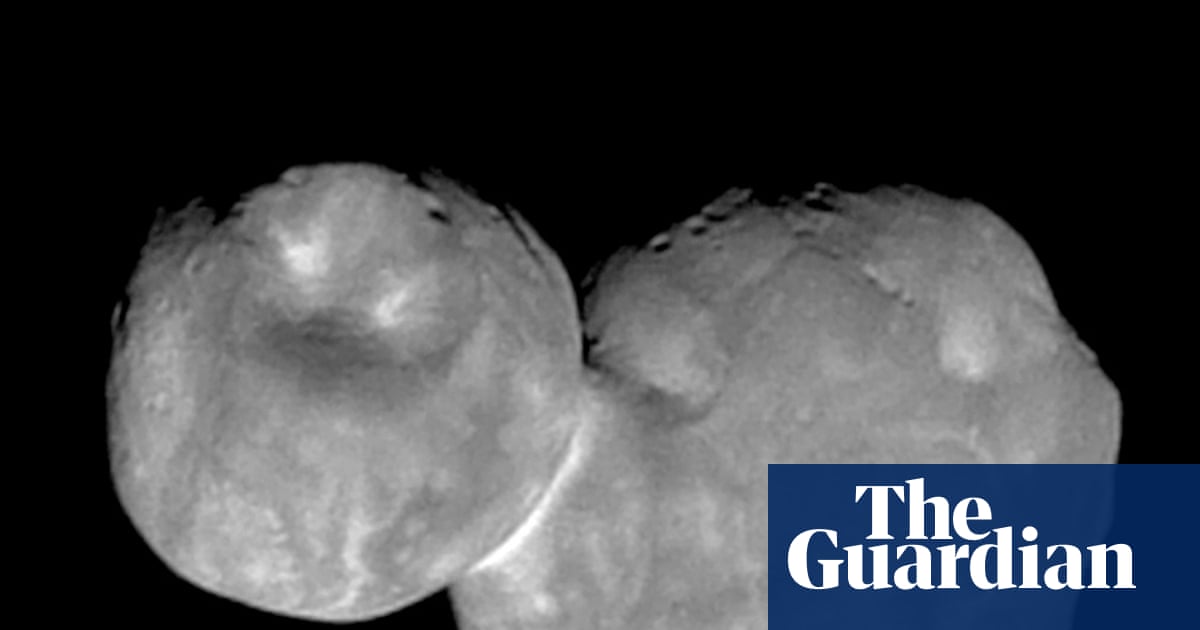
    Recent research has unveiled fascinating insights into Arrokoth, the most distant and primitive object ever encountered by a spacecraft from Earth. This ultra-red, 4 billion-year-old body captivates astronomers with its unique snowman-like shape, prompting further investigation into its origins.

    Understanding Arrokoth’s Place in the Kuiper Belt

    Arrokoth is located in the Kuiper belt, a vast region beyond Neptune’s orbit filled with icy bodies, dwarf planets, and planetesimals—the building blocks of planets. The significance of Arrokoth extends beyond its physical attributes; it provides a glimpse into the processes that shaped our solar system.

    The Shape of Arrokoth: A Closer Look

    Notably, around 10-25% of the planetesimals in the Kuiper belt exhibit a double-lobed structure, resembling either a peanut or, in Arrokoth’s case, a snowman. Previous theories suggested that both lobes of Arrokoth formed simultaneously and non-violently, possibly through gravitational collapse. However, the specifics of this process remained debated until now.

    Revolutionary Simulations Confirm Theories

    Recent computer simulations have provided evidence that gravitational collapse can indeed result in the formation of such double-lobed objects. Jackson Barnes, the lead author of the research from Michigan State University, expressed excitement over these findings:

    “It’s so exciting because we can actually see this for the first time. This is something that we’ve never been able to see from beginning to end, confirming this entire process.”

    How Gravitational Collapse Works

    The Kuiper belt is a remnant of the solar system’s primordial protoplanetary disk, consisting of vast clouds of pebbles that coalesced into planetesimals. In the gravitational collapse scenario:

    • Gravitational forces caused pebbles to clump together.
    • Simulations ran 54 tests using an initial pebble cloud with 105 particles, each about 2 km in radius.
    • Results showed small planetesimals eventually orbiting each other and merging at low velocities, forming contact binaries similar to Arrokoth.

    The Implications of These Findings

    Barnes noted that prior simulations did not account for particle interactions during contact, leading to the assumption that collisions would create larger spherical bodies. This new approach supports the hypothesis that many planetesimals, including Arrokoth, formed through gentle processes rather than violent impacts.

    Community Response and Future Directions

    Alan Stern, a prominent planetary scientist, welcomed the study, emphasizing its alignment with previous findings about Arrokoth’s formation.

    “It’s in agreement with previous work and supports the hypothesis that Kuiper belt object Arrokoth is the result of gentle formation processes.”

    However, Alan Fitzsimmons raised an interesting point regarding the simulations, noting that they indicated only 4% of objects formed as contact binaries, suggesting a potential gap between simulation predictions and observational data.

    Conclusion

    The ongoing exploration of Arrokoth not only enhances our understanding of this unique object but also sheds light on the broader mechanisms at play in the formation of our solar system. As researchers continue to refine their models, we can expect even more revelations about the origins of celestial bodies.

    For further details, I encourage you to read the original news article here.

    Share. Facebook Twitter Pinterest LinkedIn Tumblr Email
    Previous ArticleUS and Indonesia Conclude Agreement to Reduce Tariffs to 19%
    Next Article Unexpected Bonds Form in Mexican Charmer
    Li Wei

    Li Wei is a science and innovation reporter at Mirror Brief, covering space, biotech, and scientific breakthroughs for seven years. She explains technical advances without the fluff.

    Related Posts

    Science

    Exploring the Science of Cooking with Wood and Smoke

    February 19, 2026
    Science

    Exploring Psychedelics for Depression, Dart Frog Venom, and the Mystery of Chins – A Science Podcast

    February 19, 2026
    Science

    Plaid Pledges Renewable Energy Profit Sharing for Welsh Communities

    February 19, 2026
    Medium Rectangle Ad
    Politics

    UK Government Finances Exceed Expectations in January

    Tomas RiveraFebruary 20, 2026

    UK Government’s Financial Strategy: An Insightful Analysis UK Government’s Financial Strategy: An Insightful Analysis Introduction…

    Unexpected Bonds Form in Mexican Charmer

    February 20, 2026

    New Insights Into the Formation of a Snowman-Shaped Body in the Kuiper Belt

    February 20, 2026

    US and Indonesia Conclude Agreement to Reduce Tariffs to 19%

    February 20, 2026
    Blog Posts

    UK Government Finances Exceed Expectations in January

    February 20, 2026

    Unexpected Bonds Form in Mexican Charmer

    February 20, 2026

    New Insights Into the Formation of a Snowman-Shaped Body in the Kuiper Belt

    February 20, 2026

    US and Indonesia Conclude Agreement to Reduce Tariffs to 19%

    February 20, 2026

    Subscribe to Updates

    Get the latest creative news from FooBar about art, design and business.

    Medium Rectangle Ad
    About Us

    Welcome to Mirror Brief — your trusted lens into the stories shaping our world. From breaking news to in-depth analysis, we bring clarity, context, and perspective across a wide spectrum of global topics. Our mission is simple: to keep you informed, engaged, and inspired with reporting that’s accurate, timely, and thought-provoking.

    Top Picks

    UK Government Finances Exceed Expectations in January

    February 20, 2026

    Unexpected Bonds Form in Mexican Charmer

    February 20, 2026
    Recent Posts
    • UK Government Finances Exceed Expectations in January
    • Unexpected Bonds Form in Mexican Charmer
    • New Insights Into the Formation of a Snowman-Shaped Body in the Kuiper Belt
    • US and Indonesia Conclude Agreement to Reduce Tariffs to 19%
    • About Us
    • Disclaimer
    • Get In Touch
    • Privacy Policy
    • Terms and Conditions
    © 2025 Mirror Brief. All rights reserved.

    Type above and press Enter to search. Press Esc to cancel.