



Ancient Skeleton Discovery in Dijon: A Glimpse into Gaulish Practices
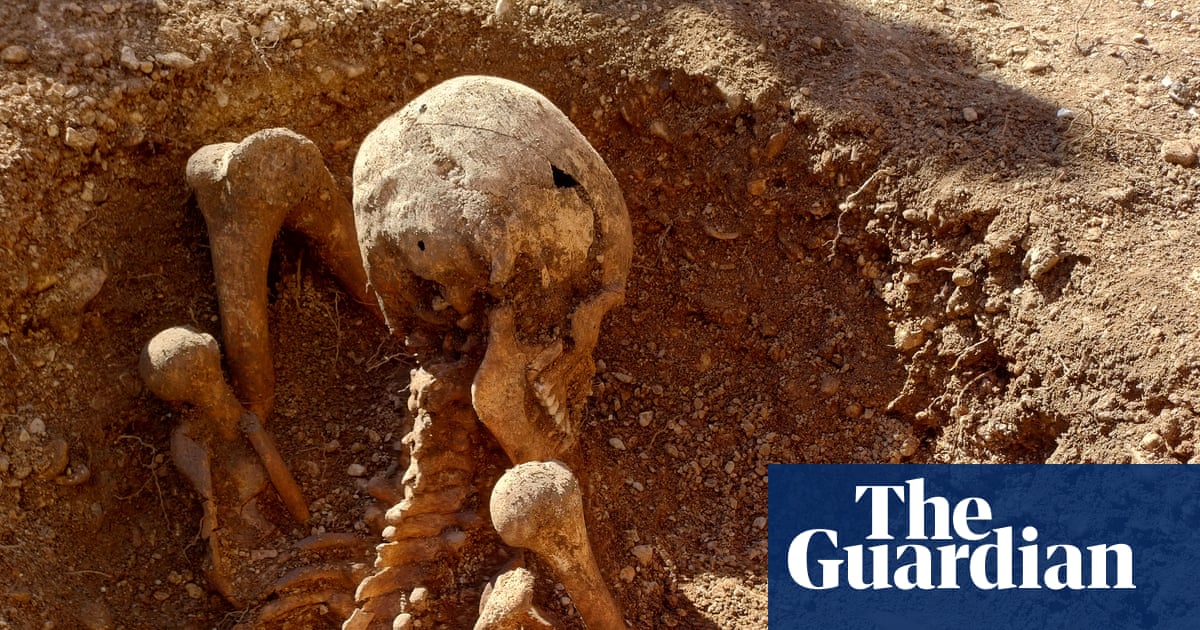
This week, a rather unusual find has captivated the attention of both locals and historians alike in Dijon, eastern France. Imagine children at a primary school discovering a skeleton sitting upright next to their playground, peering out from a circular pit. This discovery is not just a single incident; it is part of a broader archaeological saga that raises intriguing questions about the ancient Gauls and their burial practices.
A Series of Enigmatic Discoveries
What makes this discovery particularly fascinating is that it is the latest in a series of bodies found in Dijon, all buried in a seated position and facing west. The question that immediately arises is: why did the Gauls choose this specific way to lay their dead to rest?
- The skeleton, remarkably preserved, was found adjacent to the Josephine Baker primary school.
- It was discovered sitting upright at the bottom of a one-meter-wide pit, hands resting in its lap and back against the eastern wall.
- This find echoes four other skeletons unearthed earlier this month, all adopting the same curious posture.
Insights into Gaulish Culture
The recent excavations have unearthed a total of five tombs in central Dijon, with discoveries dating back to approximately 300BC to 200BC. These revelations offer a rare glimpse into the lives of the Gauls, a Celtic group whose history is often overshadowed by that of their Roman conquerors.
- Over the past 30 years, archaeological efforts have highlighted that Dijon was once a prominent site for the Gauls.
- The Gauls emerged around the fifth century BC, spreading across modern France, Belgium, Switzerland, and beyond.
- Despite their historical significance, much of what we know is filtered through the biased lens of Roman accounts, notably those of Julius Caesar.
Unanswered Questions and Theories
The ongoing excavations have not only unveiled the skeletal remains but have also sparked numerous theories regarding their burial practices:
- Were these individuals buried in this manner as a form of punishment or as a mark of honor for the powerful?
- Five of the bodies exhibit signs of violence, including one with a fatal skull wound, complicating our understanding of their societal norms.
- Interestingly, aside from a solitary armband indicating the Gallic period, no personal items were found with the remains.
Furthermore, the skeletal remains are predominantly male, ranging from 1.62 to 1.82 meters in height, with remarkably well-preserved teeth—a testament to their diet, possibly less sugary than ours today.
Frustrations of Archaeology
Inrap archaeologist Annamaria Latron noted the frustration that often accompanies archaeological work, particularly when vital contextual information is missing. The lack of surrounding artifacts and the surface layer above the tombs leaves us with more questions than answers regarding the cultural significance of these burials.
As we delve deeper into the history of the Gauls through these remarkable finds, it is clear that much remains to be uncovered. The juxtaposition of their burial practices against the backdrop of historical narratives invites us to rethink what we know about these ancient peoples.
For those intrigued by this captivating story and seeking further insights, I encourage you to explore the original news article for a more in-depth look at this discovery. You can read it here.