



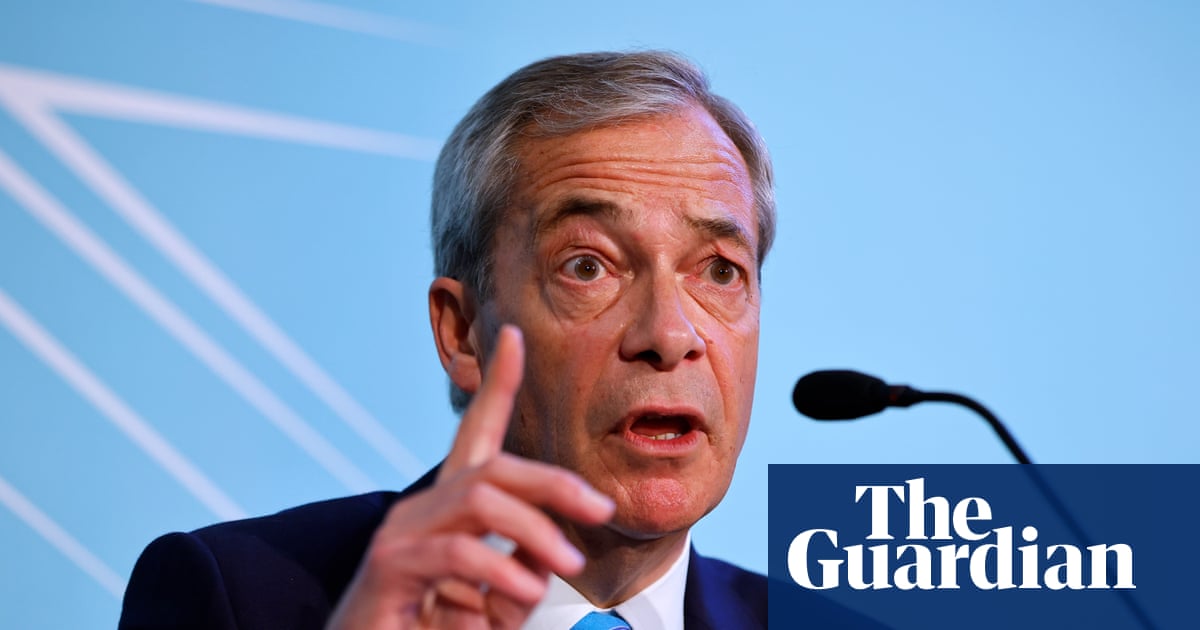
Insights on Reform UK Members’ Views on Immigration
Recent polling data has revealed a concerning trend within the membership of Reform UK, led by Nigel Farage. The findings indicate that over half of the party’s members hold views that support the deportation or encouragement to leave for non-white British citizens born abroad. This raises important questions about the direction of the party and the implications for UK politics.
Key Findings from the Poll
The survey, conducted by Survation and published by the anti-racism group Hope Not Hate, presents the following striking statistics:
- 54% of Reform members believe non-white British citizens born abroad should be forcibly removed or encouraged to leave.
- 22% of members support similar actions against non-white citizens whose parents were born in the UK.
- Surveyed members numbered 629, with the party claiming around 270,000 paid members.
Context and Implications
This polling data emerges as Farage attempts to appeal to more moderate, center-ground voters while facing challenges from the party’s right wing. The recent emergence of a hardline party by Rupert Lowe highlights a fractious environment within Reform UK.
Nick Lowles, chief executive of Hope Not Hate, pointed out that the dilution of Reform’s policies to attract moderate voters may lead to disillusionment among its core supporters. This sentiment reflects a broader trend of increasing radicalization within the party, as many members express favorable views toward right-wing activists like Tommy Robinson and Lowe.
Rising Racial Nationalism
Hope Not Hate has raised alarms about the rise of explicitly racial nationalism, characterized by a troubling definition of English identity based on “blood and ancestry.” This ideology often masquerades as a bureaucratic solution to immigration issues, but it echoes more sinister historical precedents.
Notable Developments
- Support for mass deportations is gaining traction among party members.
- Two-thirds of members view Rupert Lowe positively, indicating a shift towards more extreme policies.
- The “unite the kingdom” rally led by Robinson last year attracted significant attention, with over 150,000 participants.
Conclusion: A Fractured Political Landscape
The landscape of UK politics is undeniably evolving, with far-right sentiments becoming more mainstream. The findings from the Reform UK membership survey reflect not only internal party dynamics but also a broader societal shift towards divisive and exclusionary ideologies.
As we look ahead, it is crucial to monitor how these views influence policy-making and public discourse. The potential ramifications of such a shift could have lasting implications for the fabric of British society.
For a deeper understanding of this issue, I encourage you to read the original news article here.