

Close Menu
Mirror Brief

    Subscribe to Updates

    Get the latest creative news from FooBar about art, design and business.

    What's Hot

    Torrential Downpours and Flooding Claim 23 Lives in Nairobi

    March 7, 2026

    Groundings Highlight Global Travel’s Dependence on the Gulf Corridor

    March 7, 2026

    Australia vs. India: Exclusive Women’s Cricket Test Day Two – Live Coverage

    March 7, 2026
    Facebook X (Twitter) Instagram
    Mirror BriefMirror Brief
    Trending
    • Torrential Downpours and Flooding Claim 23 Lives in Nairobi
    • Groundings Highlight Global Travel’s Dependence on the Gulf Corridor
    • Australia vs. India: Exclusive Women’s Cricket Test Day Two – Live Coverage
    • Tory Peer Resigns Following House of Lords Investigation into PPE Contracts
    • WGA Members Endorse Negotiation Agenda Centered on Healthcare, Compensation, and Artificial Intelligence
    • The Vanishing Sheep: From Our Hills to Our Dinner Plates
    • Serene Winter Getaway in the French Riviera
    • FDA Vaccine Chief from Trump Administration Resigning Again Amid Controversy
    Saturday, March 7
    • Home
    • Business
    • Health
    • Lifestyle
    • Politics
    • Science
    • Sports
    • World
    • Travel
    • Technology
    • Entertainment
    Mirror Brief
    Home»Science»Ancient Cave Artwork May Redefine Human Creativity’s Origins
    Science

    Ancient Cave Artwork May Redefine Human Creativity’s Origins

    By Li WeiJanuary 22, 2026No Comments3 Mins Read
    Share Facebook Twitter Pinterest LinkedIn Tumblr Reddit Telegram Email
    Ancient Cave Artwork May Redefine Human Creativity’s Origins
    Share
    Facebook Twitter LinkedIn Pinterest Email

    Analysis of the Oldest Known Cave Painting

    The World’s Oldest Known Cave Painting: A Leap in Human Creativity

    Recent findings from the island of Sulawesi in Indonesia have unveiled what researchers claim to be the world’s oldest known cave painting. This discovery is not merely a historical footnote but a significant insight into the evolution of human creativity and symbolic thought.

    Significance of the Discovery

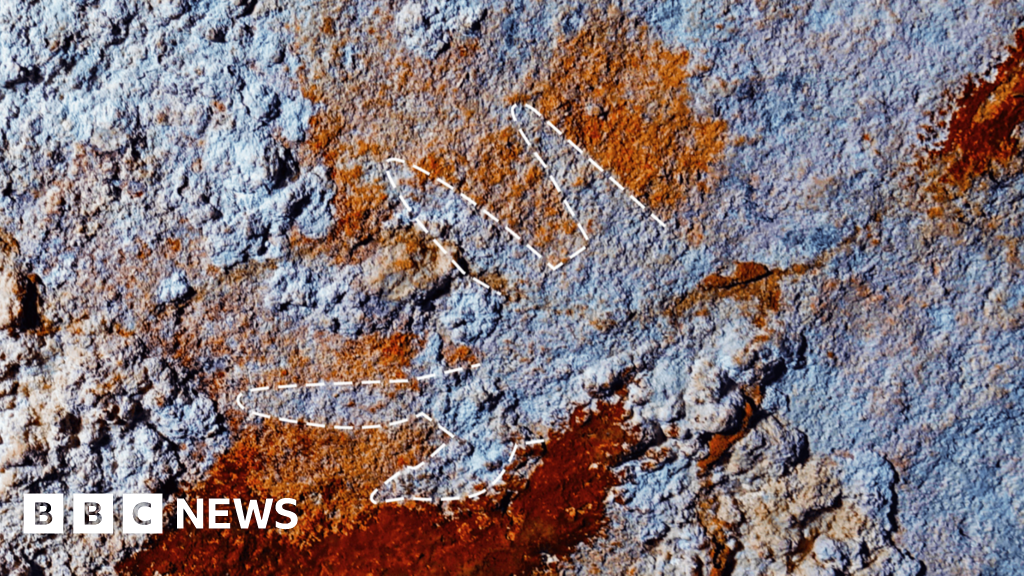
    Dating back at least 67,800 years, this red outline of a hand represents a leap in symbolic imagination, suggesting that early humans had begun to think abstractly long before the previously believed timeline. This artwork predates the previous record holder—a controversial hand stencil in Spain—by around 1,100 years.

    • The painting indicates that Homo sapiens likely reached the Sahul landmass, encompassing Australia and New Guinea, much earlier than previously believed.
    • It challenges the long-held Eurocentric view that abstract thinking and artistic expression emerged primarily in Europe during the Ice Age.

    A Shift in Understanding Human Creativity

    Over the past decade, discoveries in Sulawesi have reshaped our understanding of when and where human creativity began to flourish. Cave art is a vital marker of abstract thought, which is essential to the development of language, religion, and science.

    Professor Adam Brumm from Griffith University emphasized that this new evidence suggests that creativity was not a sudden explosion in Europe but an inherent trait of our species, with roots tracing back to Africa.

    Details of the Artwork

    The cave painting was located in a limestone cave known as Liang Metanduno. The technique used—spraying pigment around a pressed hand—demonstrates a sophisticated understanding of art. The artist not only created an outline but also modified it to reflect a claw-like motif, showcasing an early form of creative experimentation.

    This level of creative alteration is not observed in the artwork produced by Neanderthals, further underscoring the uniqueness of early Homo sapiens’ artistic expression.

    Broader Implications for Human Migration

    The implications of this discovery extend beyond artistry. Given Sulawesi’s strategic position in the northern sea route between Asia and ancient Sahul, it provides critical evidence regarding the migration of our ancestors. The findings suggest that humans might have settled in Australia around 65,000 years ago, much earlier than previously estimated.

    • This evidence supports the notion that the creators of the Sulawesi paintings were part of a broader population that migrated through the region.
    • The traditional view of a “big bang” of creativity in Europe is being replaced by a recognition of a more complex and widespread human creativity that existed long before.

    Conclusion: A New Narrative in Human History

    The discovery of the oldest cave painting in Sulawesi is a pivotal moment in our understanding of human history. It illustrates that the capacity for artistic expression and symbolic thinking was present much earlier than previously accepted. This finding opens the door to a richer narrative of human creativity that spans continents and millennia.

    For more detailed information on this groundbreaking discovery, I encourage you to read the original article here.

    Share. Facebook Twitter Pinterest LinkedIn Tumblr Email
    Previous ArticleNewcastle vs. PSV Eindhoven: Yoane Wissa Shines After Aspiring for These Moments
    Next Article Recap of Season 14, Episode 3 of The Masked Singer: Handyman and Scarab Unmasked
    Li Wei

    Li Wei is a science and innovation reporter at Mirror Brief, covering space, biotech, and scientific breakthroughs for seven years. She explains technical advances without the fluff.

    Related Posts

    Science

    The Vanishing Sheep: From Our Hills to Our Dinner Plates

    March 7, 2026
    Science

    Chris Whitty: Weight-Loss Medications Alone Won’t Address the UK’s Obesity Crisis

    March 6, 2026
    Science

    Approval Looms for 3G Pitch Amid Pollution Concerns

    March 6, 2026
    Medium Rectangle Ad
    World

    Torrential Downpours and Flooding Claim 23 Lives in Nairobi

    Mateo AlvarezMarch 7, 2026

    Nairobi Airport Disruptions Analysis Disruption at Nairobi Airport: A Closer Look The recent weather-related disruptions…

    Groundings Highlight Global Travel’s Dependence on the Gulf Corridor

    March 7, 2026

    Australia vs. India: Exclusive Women’s Cricket Test Day Two – Live Coverage

    March 7, 2026

    Tory Peer Resigns Following House of Lords Investigation into PPE Contracts

    March 7, 2026
    Blog Posts

    Torrential Downpours and Flooding Claim 23 Lives in Nairobi

    March 7, 2026

    Groundings Highlight Global Travel’s Dependence on the Gulf Corridor

    March 7, 2026

    Australia vs. India: Exclusive Women’s Cricket Test Day Two – Live Coverage

    March 7, 2026

    Tory Peer Resigns Following House of Lords Investigation into PPE Contracts

    March 7, 2026

    Subscribe to Updates

    Get the latest creative news from FooBar about art, design and business.

    Medium Rectangle Ad
    About Us

    Welcome to Mirror Brief — your trusted lens into the stories shaping our world. From breaking news to in-depth analysis, we bring clarity, context, and perspective across a wide spectrum of global topics. Our mission is simple: to keep you informed, engaged, and inspired with reporting that’s accurate, timely, and thought-provoking.

    Top Picks

    Torrential Downpours and Flooding Claim 23 Lives in Nairobi

    March 7, 2026

    Groundings Highlight Global Travel’s Dependence on the Gulf Corridor

    March 7, 2026
    Recent Posts
    • Torrential Downpours and Flooding Claim 23 Lives in Nairobi
    • Groundings Highlight Global Travel’s Dependence on the Gulf Corridor
    • Australia vs. India: Exclusive Women’s Cricket Test Day Two – Live Coverage
    • Tory Peer Resigns Following House of Lords Investigation into PPE Contracts
    • About Us
    • Disclaimer
    • Get In Touch
    • Privacy Policy
    • Terms and Conditions
    © 2025 Mirror Brief. All rights reserved.

    Type above and press Enter to search. Press Esc to cancel.