



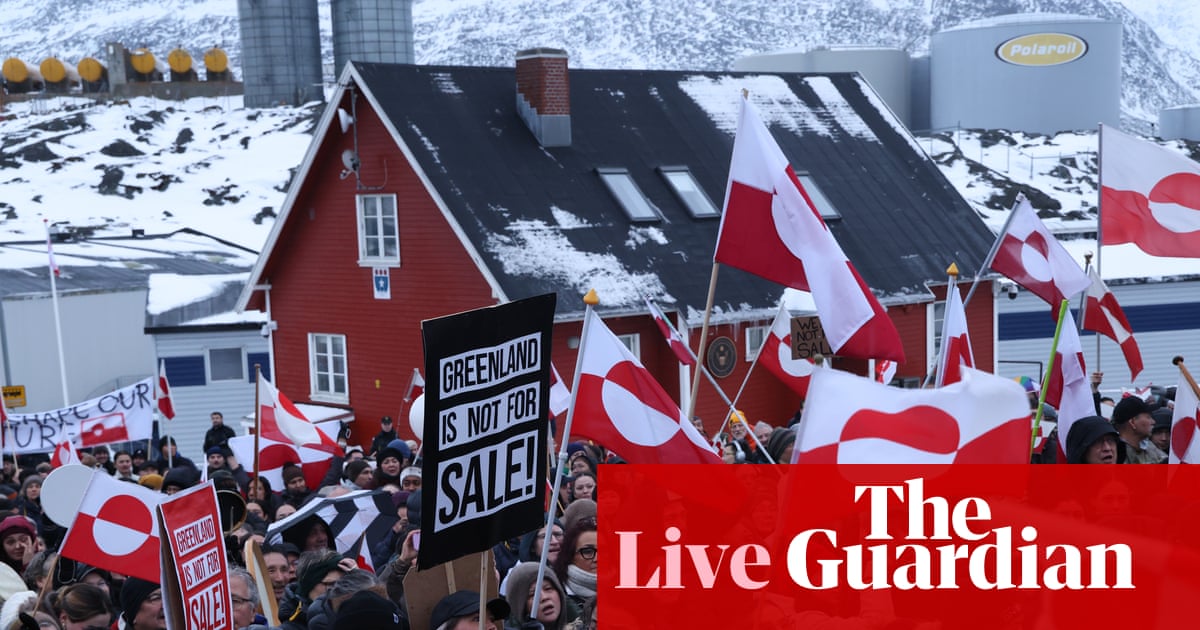
Trump’s Greenland Threat: A Dangerous Downward Spiral
The recent comments from U.S. President Donald Trump regarding Greenland have sent shockwaves through Europe, prompting a strong reaction from leaders across the continent. The ramifications of his threats to impose tariffs on European allies until the U.S. is allowed to buy Greenland are profound and warrant a closer examination.
Joint Statement from European Allies
In a rare show of unity, the UK, Denmark, Finland, France, Germany, the Netherlands, Norway, and Sweden have released a joint statement condemning Trump’s threats. They warn that such actions could lead to a “dangerous downward spiral” in transatlantic relations. The statement emphasizes the importance of sovereignty and territorial integrity, proclaiming:
“We stand in full solidarity with the Kingdom of Denmark and the people of Greenland.”
Global Repercussions and Responses
As Trump’s tariff threats loom, several key issues arise:
- Condemnation Across Europe: European leaders have uniformly criticized Trump’s approach. The Netherlands’ foreign minister labeled the move as “blackmail,” while Finland’s Prime Minister stated that tariffs would be harmful to both Europe and the U.S.
- UK’s Position: Culture Secretary Lisa Nandy declared the UK’s stance on Greenland as “non-negotiable.” This aligns with the Labour Party’s leadership, signaling a firm opposition to any economic coercion from the U.S.
- Potential Trade War: Norwegian Prime Minister Jonas Gahr Stoere cautioned that a trade war could spiral out of control, emphasizing the need for restraint and dialogue.
- France’s Strategic Response: President Emmanuel Macron is expected to call for the activation of the EU’s “anti-coercion instrument” if Trump follows through with tariffs, highlighting the seriousness of the situation.
International Relations at Risk
The implications of Trump’s threats extend beyond mere economic concerns. Spain’s Prime Minister Pedro Sanchez articulated that a U.S. invasion of Greenland would have disastrous repercussions for NATO, potentially legitimizing Russian aggression in Ukraine. This sentiment echoes among many leaders, who recognize the fragility of international alliances at this juncture.
Moreover, U.S. Senator Mark Kelly has raised alarms about the damage Trump’s rhetoric is inflicting on America’s global standing, warning that such actions could lead to isolation from allies.
Conclusion: A Call for Dialogue
It is clear that Trump’s strategy has ignited fierce debate and concern among European allies. The shared sentiment is that disputes among allies should be resolved through discussion and not threats. As we move forward, it is crucial for leaders on both sides of the Atlantic to engage in meaningful dialogue to address these issues without resorting to economic warfare.
For more on this developing story, I encourage you to read the original news at the source: The Guardian.