



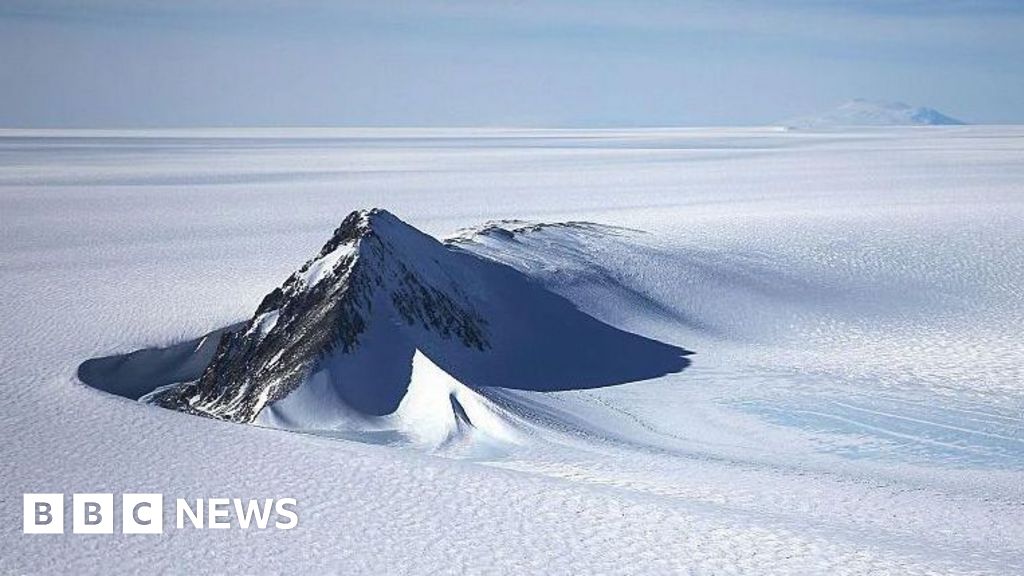
Unveiling Antarctica: New Mapping Reveals Hidden Landscapes
A groundbreaking development in our understanding of Antarctica has emerged with the release of a new map, providing unprecedented clarity about the continent’s hidden topography beneath its icy surface. This advancement is vital not only for scientific inquiry but also for our comprehension of climate change and its far-reaching effects.
Significance of the Discovery
The research team utilized satellite data combined with insights into glacial movement to create a detailed representation of what lies beneath the Antarctic ice. This is an essential stride forward in a field where much of what we know has been limited to surface observations.
- New Discoveries: Thousands of previously unknown hills and ridges have been identified, along with clearer mappings of existing mountain ranges.
- Climate Implications: Understanding the hidden landscapes is crucial for predicting how Antarctica will respond to climate change and the potential for sea-level rise.
- Research Techniques: The approach taken by researchers combines satellite data with physics-based models to enhance the accuracy of their findings.
Expert Insights
Lead author Dr. Helen Ockenden describes the advancement as akin to moving from a grainy image to a high-definition view, revolutionizing our perspective on Antarctica’s underbelly. Historically, we have known more about the surface of other planetary bodies than about Antarctica’s subterranean features.
As Prof. Robert Bingham, a glaciologist involved in the study, conveys, this mapping effort is a remarkable achievement. The excitement surrounding the discovery of previously unseen landscapes underscores the study’s potential to reshape our understanding of the continent.
Research Methodology
Traditional radar-based methods often left scientists with incomplete pictures due to the vast distances between survey lines. In contrast, the new approach integrates satellite imaging and physics to interpret glacial movement, akin to gauging underwater landscapes by observing surface conditions.
Future Implications
While this new map is certainly impressive, it is essential to recognize that it is not the final word. Uncertainties remain about ice flow dynamics, and further exploration is needed to understand the rocks and sediments lying beneath.
- Next Steps: Additional surveys from various sources will be necessary to refine our understanding of Antarctica’s geology.
- Impact on Climate Models: Enhanced knowledge of the landforms will improve predictive models concerning glacier movement and melting rates in a warming climate.
- Global Sea-Level Rise: This research is critical in evaluating how quickly Antarctica might contribute to rising sea levels, a pressing concern in climate science.
Conclusion
The implications of this research are profound. It not only sheds light on the mysterious landscape beneath the ice but also equips scientists with better tools to anticipate future climate scenarios. As we continue to explore and understand Antarctica, we pave the way for crucial insights into global climate dynamics.
For those interested in delving deeper into the original findings, I encourage you to read the full article here.