



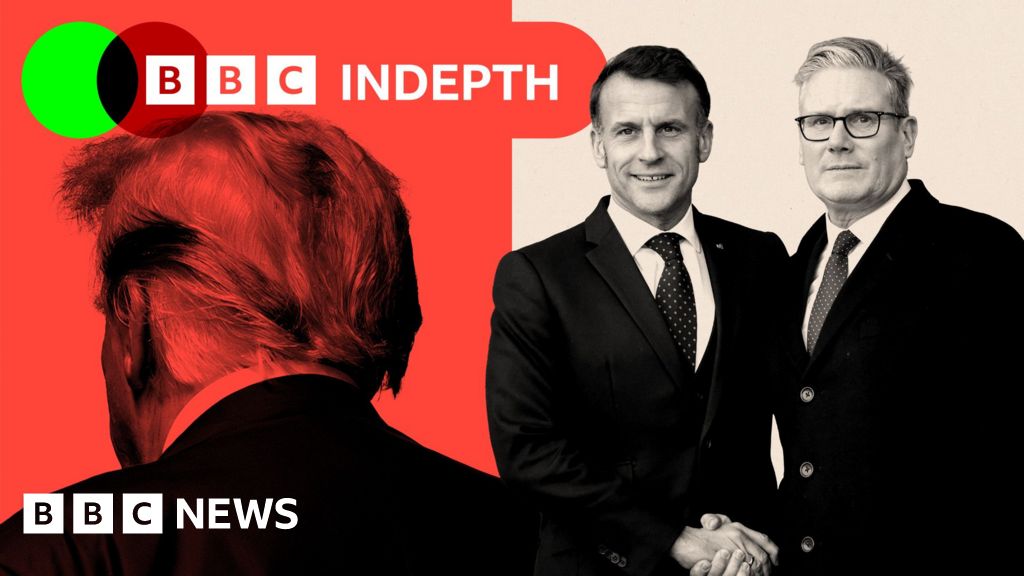
US National Security Strategy: A Shift in Global Dynamics
For 80 years, the United States and Europe shared a commitment to defend democracy and human rights. This partnership, which began with President Harry Truman’s pivotal speech in 1947, has shaped global relations through institutions like NATO and the United Nations. However, the recent publication of the new US National Security Strategy (NSS) marks a significant turning point in this long-standing alliance.
A Change in Tone
The NSS indicates a departure from the traditional American-led global order, suggesting that the familiar world of mutual commitments may be coming to an end. Notably, the report refers to the “rules-based international order” in quotes, signaling a potential delegitimization of this framework.
- The NSS emphasizes an inward focus, suggesting that the US may no longer prioritize the ideals of democracy and human rights on the global stage.
- Vice-President JD Vance’s speech at the Munich Security Conference highlighted a new narrative: the threat to Europe comes not from external forces like Russia, but from internal suppression of free speech and political opposition.
Rethinking Alliances
As the NSS shifts away from a cooperative global framework, it raises pressing questions about the future of US-European relations. The strategy criticizes European nations’ trajectories, indicating a growing skepticism about their reliability as allies. Key points include:
- The document warns of “economic decline” in Europe, coupled with a potential for “civilizational erasure.”
- Concerns are raised regarding the demographic changes in NATO countries, suggesting that some may become majority non-European, impacting long-term security partnerships.
A New World Order?
With this new strategy, the US appears to be embracing a more muscular stance, reminiscent of the Monroe Doctrine, asserting its right to intervene in the Western Hemisphere. This approach aims to uphold American interests against rising powers like China and maintain dominance in regions like Latin America.
- The NSS asserts the need for the US to reclaim its influence, particularly in critical areas such as the Panama Canal.
- China’s growing presence in Latin America is seen as a direct challenge to US hegemony, prompting a call for renewed American engagement.
Implications for Europe
The NSS raises significant concerns about Europe’s future, indicating that a strong, self-reliant Europe is essential for the US to effectively compete on the global stage. Yet, this reliance conflicts with the desire for European nations to assert their sovereignty and independence.
- The document suggests cultivating resistance to what it perceives as Europe’s current misalignment, favoring a return to nationalist sentiments.
- Europe’s leaders, such as Germany’s Chancellor Friedrich Merz, have begun to advocate for greater independence from US influence, signaling a shift in the transatlantic relationship.
Looking Ahead
Ultimately, the NSS indicates that the US is re-evaluating its role in global affairs, focusing more on national interests while questioning the effectiveness of multilateral institutions. This shift will likely leave Europe grappling with its identity and future direction, especially as it faces an increasingly assertive Russia.
As we move forward, it will be crucial for Europe to redefine its relationships and establish a more autonomous stance, particularly in defense and foreign policy. The evolving dynamics could either lead to a more fragmented world or prompt a new understanding in transatlantic relations.
For further details and in-depth analysis, please read the original news at the source: BBC News.