



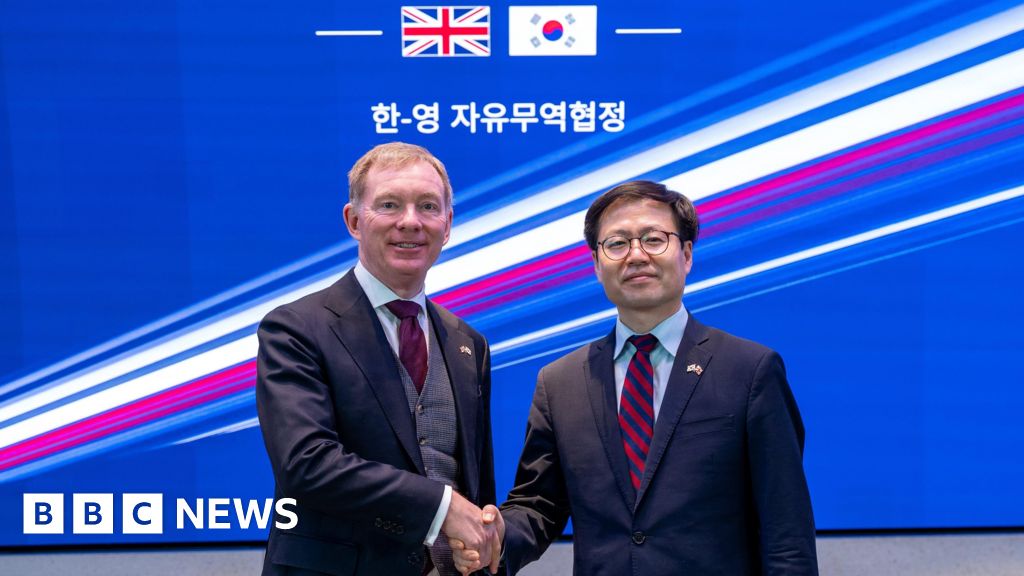
UK and South Korea Forge New Trade Agreement: A Game Changer?
The recent announcement of a new trade deal between the UK and South Korea has stirred a mixture of optimism and skepticism among economists and business leaders alike. As both countries seek to strengthen their economic ties post-Brexit, the implications of this agreement deserve a closer examination.
Key Highlights of the Trade Deal
The UK government is touting this agreement as a significant step forward, claiming it will generate thousands of new jobs and inject billions into the economy. Here are the main points:
- Tariff-Free Trade: 98% of goods will continue to be traded tariff-free, aligning with the terms previously established with the EU.
- Sectoral Benefits: Key industries like pharmaceuticals, automotive, alcohol, and financial services are expected to reap the rewards.
- Protection for Exports: The deal safeguards £2 billion of UK exports from potential tariff increases that were set to occur in 2026.
- Focus on Non-Tariff Barriers: The agreement aims to address non-tariff barriers, improving product origin rules and enhancing digital protections.
The Broader Economic Context
While the trade deal sounds promising, it is essential to consider the broader economic context:
- Previous Agreements: This marks the fourth trade deal struck by the Labour government, following those with the EU, US, and India, yet none have significantly impacted the UK economy so far.
- Trade Decline: Recent data shows a 16.4% decline in UK exports to South Korea and a 10.8% decline in imports from South Korea over the past year.
- Future Projections: The Office for Budget Responsibility (OBR) has indicated that major trade agreements are unlikely to yield measurable economic benefits by 2030.
Reactions from Industry Leaders
Industry leaders have largely welcomed the deal, highlighting its potential to enhance market access. Here are some notable responses:
- Bentley Motors: CEO Frank-Steffen Walliser emphasized the importance of smooth international trade for automotive growth.
- Diageo: The interim CEO noted the deal would help meet the rising demand for Guinness in South Korea.
- Scotch Whisky Association: Representatives highlighted the deal’s potential to boost whisky exports to a crucial market.
Conclusion: A Step in the Right Direction?
As the UK seeks to redefine its global trading relationships in a post-Brexit landscape, the trade agreement with South Korea represents a hopeful yet cautious approach. While the immediate benefits are evident, the long-term impact remains to be seen. Will this deal truly invigorate the UK economy, or will it merely serve as another announcement with little substance? Only time will tell.
For more details, you can read the original news article here.